
"Gone but not lost"
On memory, history, and the mythology of self.

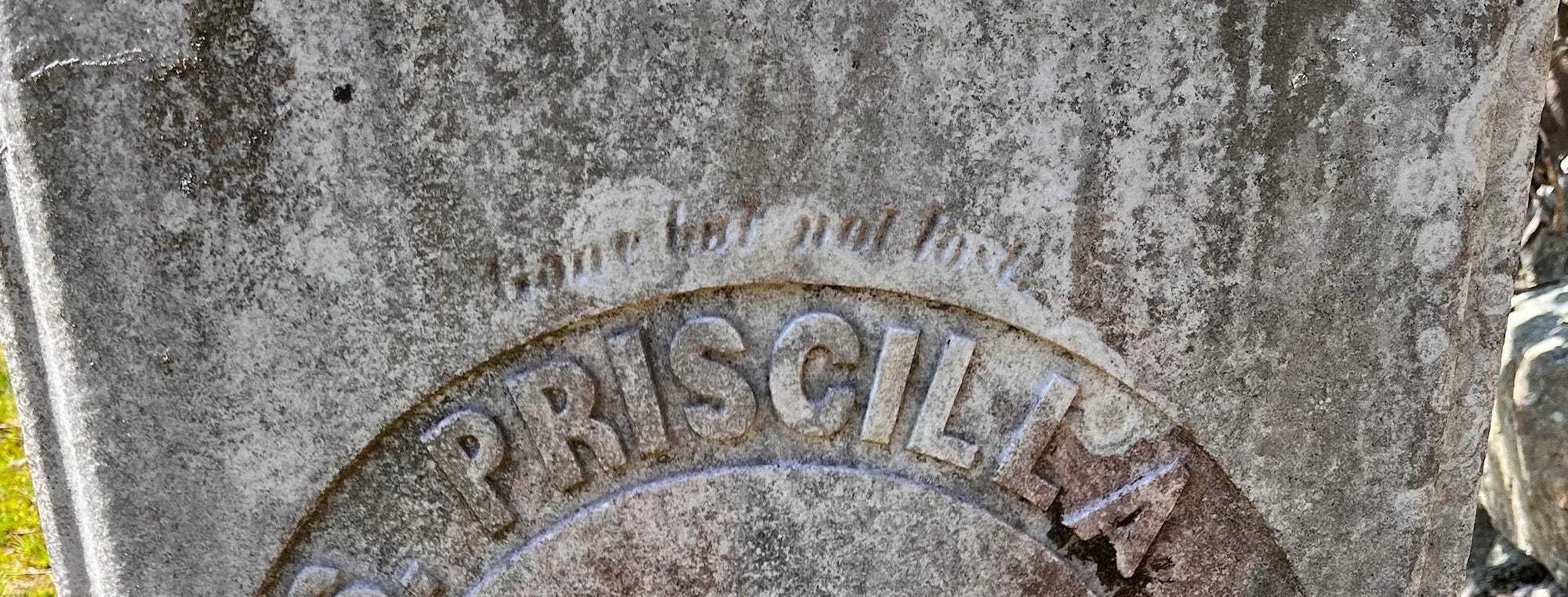
In 2015, quite suddenly, I acquired a great-great grandfather who fought in the Civil War, a many times great-grandmother who was kicked out of Massachusetts for non-conforming religious views and helped found the town of Portsmouth, Rhode Island, and a many times great-grandfather who came to Plymouth Colony on the Mayflower and was sentenced to be tied back to back with his enemy for fighting a duel.
What happened in 2015 was that I took an Ancestry DNA test, which confirmed and expanded the research I’d started to do when I encountered Ancestry.com as a reference librarian, and, before that, the limited digging I’d been able to do using the few scraps of information I had. I was adopted, and like most adoptions through the 1980s, it was a “closed” adoption, meaning I had a falsified birth certificate and no knowledge of who I was, where I came from, or who my parents were. I was “chosen.” Wasn’t that enough?
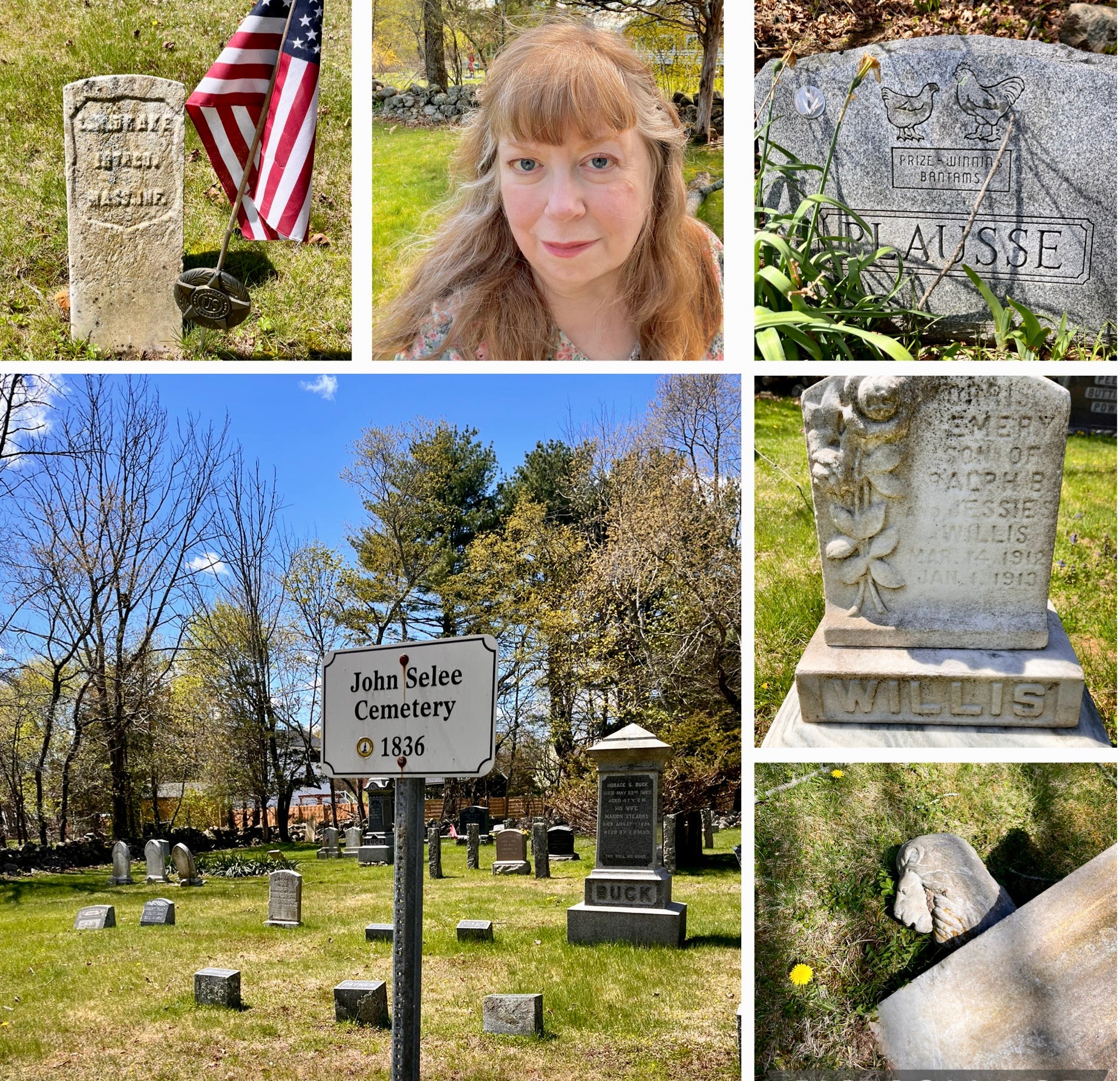
As any adoptee could tell you: no, it wasn’t. As a child, I was nurtured, loved, given everything I needed to grow. My present was secure. But I had no past. No faces that looked like mine in family albums. No sense of heritage, of history, of self.
Strangers would ask me, “Where did you get that red hair?”, as though I had stolen it. I had no answer to give, unless I made one up.
You have to make up a lot. And so you do.
-from “Three Fatherless Daughters,” originally published in Hayden’s Ferry Review, 2002
I was always told that “when I was old enough,” i.e., 18, my parents would share what information they had with me. But that turned out to be almost nothing: a baptismal certificate from a small town in Massachusetts, and a hospital birth form from the (now closed) Memorial Hospital in Rhode Island. On one form, my birth mother’s maiden name was listed as Walker; on another, it was Willis. The address she listed was, as I learned later when I tried to find it, non-existent.
The man listed on the forms was my birth mother’s husband. But, as I would also learn later, he was not my father. A visit to the adoption agency confirmed this, and very little else. According to the case worker I spoke with, my birth father had “an Irish-sounding name.” When I asked what kind of person he was, she said there was no evidence he was a “leather jacket-wearing thug.” Good to know! (Although, as a Ramones fan, I objected to the leather jacket negativity.)
After that, the identity quest went to the back burner for a while; there was college, grad school, trying to be a writer, trying to make a living (two different things, always). At one point I did some research through court and town records, which, because it was the 90s, meant going in person to libraries and courthouses. What I found was sparse and random: a filing for separation support, some real estate transactions, some kind of probate document involving a masonic lodge. I joined an adult adoption support group, where I met a fellow adoptee who remains a good friend to this day. But I also went through periods where I felt the need to distance myself from a past that felt messy and complicated and only heightened my insecurities.
I think this one step forward-one step back pattern is common to adoptees and anyone who has a complicated identity. One book I’ve been thinking about a lot lately is Scrap by Luanne Castle. It’s a memoir in flash, and I had the pleasure of seeing some of the flash pieces in workshops I taught. Luanne was not adopted, but her father grew up without knowing his father, and many of the generational issues she writes about—secrets, infidelities, the sense of having a “missing piece”—resonate for me.
Somehow, though, excavating the distant past feels less fraught than the recent past. Yes, an ancestor of mine was fined for having “carnall coppulation” and warned to “take heed lest evil come of such carriages,” but nobody is left alive to be hurt by some 350-year-old scandal. So, back to Ancestry. And the rogue Pilgrim. And Jessie.
Jessie Sharp Drake Walker Willis Ethier. She was the child of a Civil War veteran but lived to see the launch of Sputnik. She had three husbands (that we know of). She was my great-grandmother. I knew that she lost her second child, who would have been my great-aunt, during her first marriage to Charles A. Walker, my great-grandfather. I knew, or surmised from dates found in records, that this loss ended the marriage. When Charles died, years later, he was buried with his infant girl.
But Jessie moved on. Her second husband, Ralph Willis, was a farmer who at one point drove an ice wagon. (A distant cousin, discovered on Ancestry, sent me a photo of Ralph on his wagon.) I knew that this marriage also ended, but what I didn’t know until recently was that Jessie also lost an infant child during her marriage to Ralph. I definitely didn’t know that her older sister, Mabel Drake Carr, later married Ralph, becoming the second Mrs. Willis. Then I found Ralph’s gravestone, unexpectedly in the same cemetery where Jessie’s father was buried.
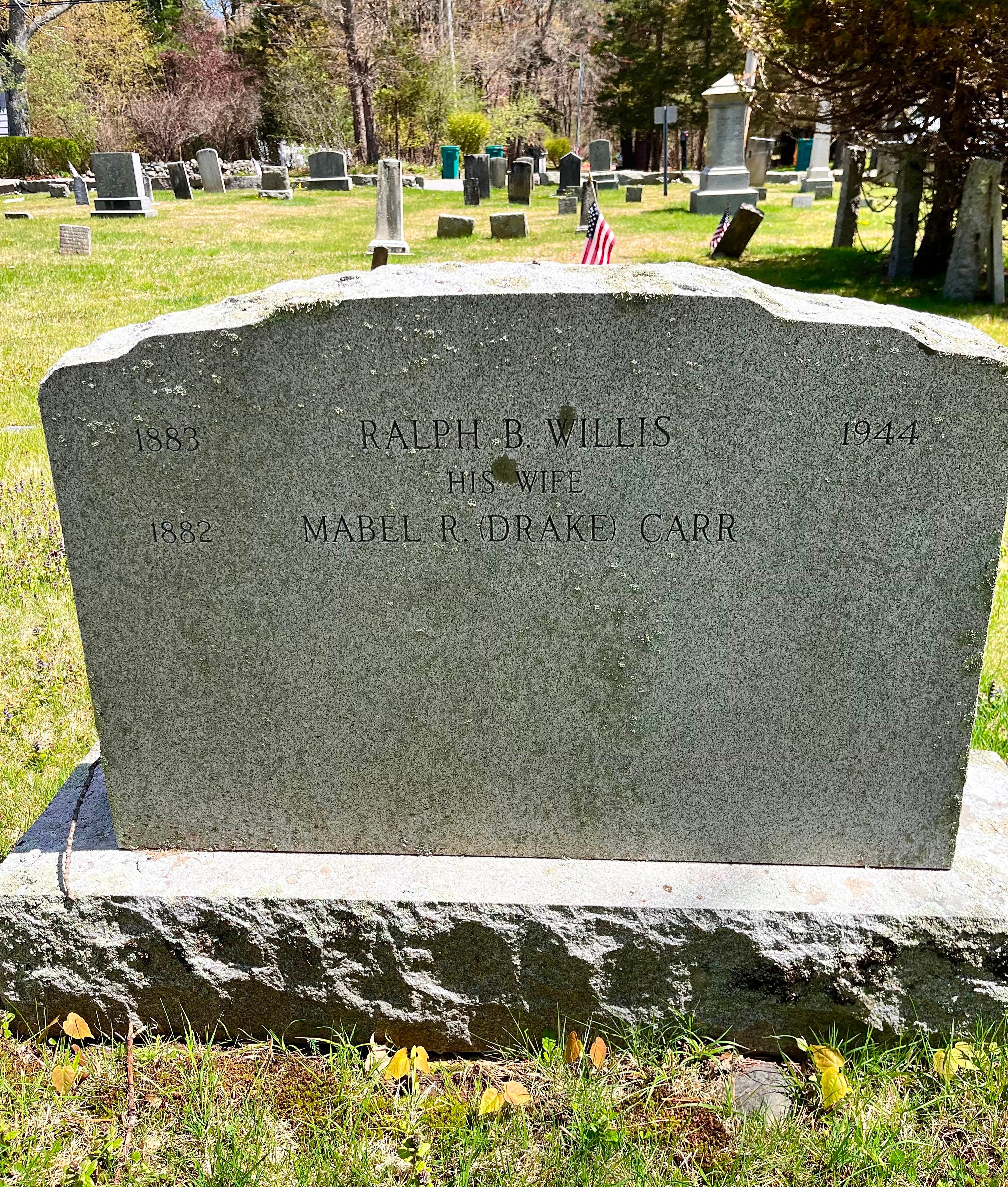
Apparently, Mabel and Ralph stuck it out. Mabel’s date of death is not engraved on the stone, but she died in 1981 at the age of 99. I could have met her. I wonder what stories she would have told?
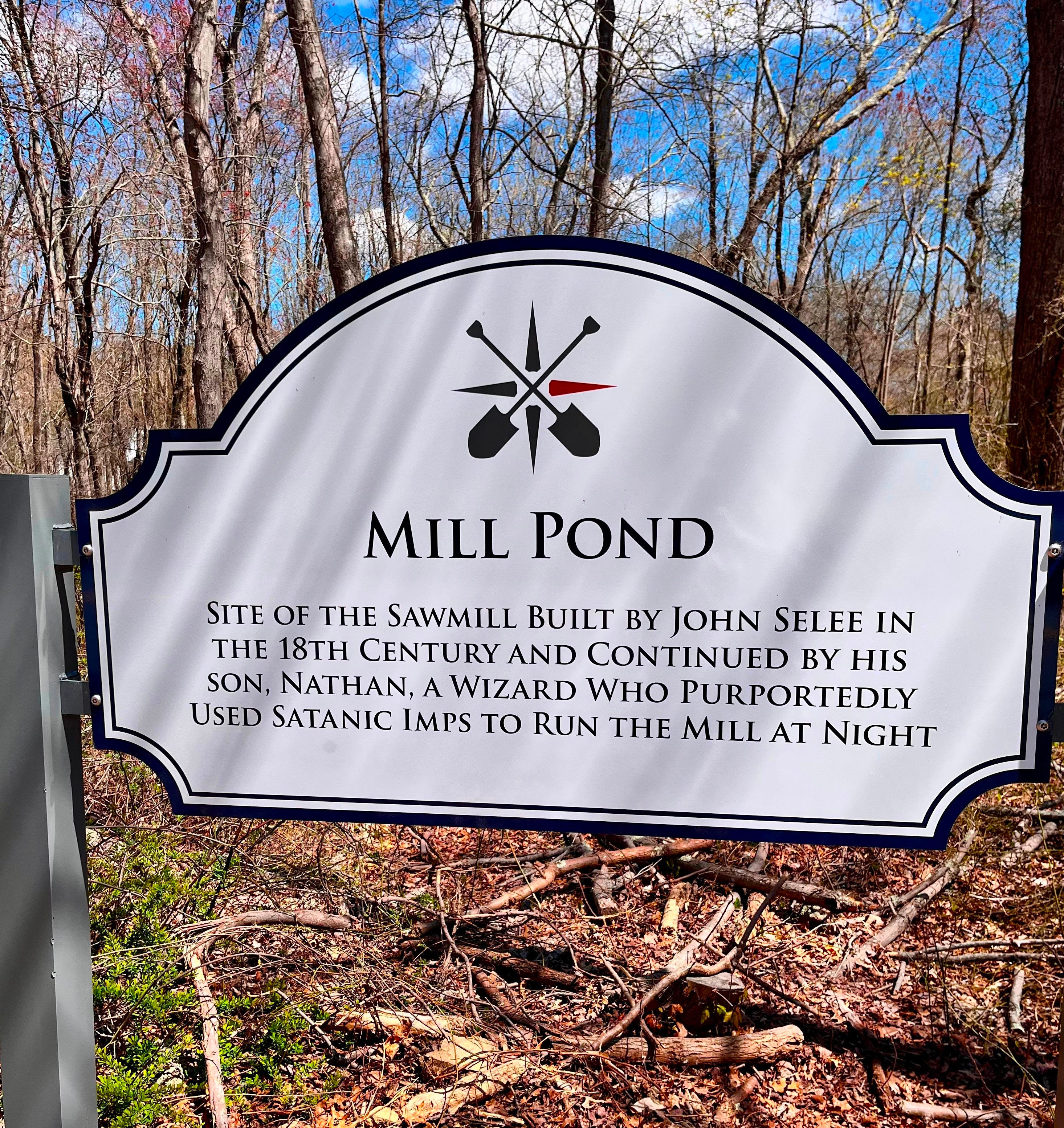
I found Mabel and Ralph’s gravestone by accident when I visited a historic cemetery during my stay as a writer in residence at the Ames Free Library in Easton, Massachusetts. I knew that my great-great grandfather, Laban Wheaton Drake (could there be a more New England name than that?) had lived in Easton and was buried there. When I looked up the cemetery online, I found it was near the site of a “haunted” mill. Or maybe “haunted” isn’t precisely the word; maybe “cursed” or “possessed” would be more accurate. The mill was built by an 18th-century entrepreneur, John Selee, whose son Nathan was a “wizard” who ran the mill with “Satanic Imps.”
I have so many questions about this. Did Nathan make a pact with the devil to keep the mill running? Was he simply too cheap to pay union wages? Did the locals call him “Wizard” Selee, like Wizard Whately in H.P. Lovecraft’s “The Dunwich Horror?”
I should mention, at this point, that the town of Easton is located in an area of southeastern Massachusetts known as the Bridgewater Triangle, approximately 200 acres clustered around the Hockomock Swamp, whose Wampanoag name means “the place where spirits dwell.” It’s said to be home to hauntings, paranormal phenomena such as Bigfoot and giant prehistoric birds, and tiny tricksters known as Pukwudgies. There’s also a legendary ghost known as the “red-headed hitchhiker” (no relation, or maybe he is) who stalks the roads in the neighboring town of Rehoboth.
I had to see the mill site for myself, and I did. Nothing is left of the mill, but along the roadside, by the woods, there’s a sign recording the history, or legend, as it may be. (Remember what John Ford said about printing the legend.)
The John Selee Cemetery, just down the road from the sign, looks like a lot of old New England graveyards, including one I used to play in as a kid. Only a few different family names appear there, so perhaps it was a family graveyard. Were the Selees related to the Drakes? To the Willises? It’s going to take more research to find that out. But as someone who grew up devouring stories by Poe, Lovecraft, and Stephen King, I’m tickled to have a bit of New England gothic spookiness associated with my ancestry.
Further Reading
—A new story featuring the Red-Headed Hitchhiker is forthcoming in BULL, most likely in October.
—A story about one of my Pilgrim ancestors was published in 3Elements Literary Review, No. 33.
—There will probably be more Jessie stories, but here are the ones I’ve written so far, in roughly chronological order by Jessie’s life. It’s worth noting, of course, that all these stories are fiction. History can tell us when someone was born, or married, or died, but stories are an act of sympathetic imagination, a way to try to understand why someone did what they did.
Jessie’s Life in Three Surnames, in New Flash Fiction Review
Jessie’s Egg, in The Ekphrastic Review
Jessie: A Pastoral, in The Cabinet of Heed
Devil’s Breath, in 100 Word Story
Why Jessie Was Turned Down by the D.A.R. (1916), in Does It Have Pockets?
Kathryn, I loved reading your search and connections story. You have called out your place in history which is something that has little to do with how someone is raised IMO. As the mom and sister of adoptees your situations are close to my heart. It's wonderful to be raised in a loving family, but it's also good to know where one fits within both history and genetics. I hope all this is going to feature in a book of some sort, Kathryn. Thank you so much for the Scrap shoutout. Without my genealogical research (and DNA results) it wouldn't have been complete.
Kathryn, passing along that many states allow adopted children to request their original birth certificate after a specific number of years has passed. Some states allow health/medical information to be enclosed along with the original birth certificate. With Ancestry, you may connect with a closely connected relative who can provide the details of your birth family.